Nanyang Wanli: Exploring the Evolution of Chinese Culture in Singapore and Malaysia
Tsinghua University’s Zhili College “Nanyang Wanli” overseas practice team embarked on an immersive research trip to Singapore and Malaysia, focusing on the evolution of overseas Chinese culture and the integration of multiculturalism, with the defense of their research results held on March 14, 2026. The team were accompanied by John Paul Grima, a lecturer at Tsinghua University’s Language Centre.
Nanyang Wanli set out to explore the unique development of Chinese culture in the two core overseas Chinese societies of Singapore and Malaysia, aiming to provide practical references for the overseas communication of Chinese culture and the construction of cross-cultural dialogue.
Prior to the social practice, the team laid a solid foundation through in-depth academic and cultural preparation. This included hosting a workshop on the theme of Culture Shock, attending an online lecture on Southeast Asian multiculturalism by Li Yuqing, a researcher at Tsinghua University’s Regional Institute, and organizing a sharing session for Singaporean international students. The team interviewed core members of the THUMSA Association and co-hosted a Malaysian teahouse theme day with the association, building preliminary connections and understanding of local culture.
Field research was comprehensive and multi-dimensional, covering a wide range of institutions and scenes across Singapore and Malaysia. The team visited five educational institutions (including River Valley High School, Nanyang Technological University, National University of Singapore, Confucius Institute at the University of Malaya, and Kuen Cheng High School), four cultural institutions (such as Singapore Centre for Chinese Language, Chinese Cultural Centre, and Tsinghua University’s 24 Solar Terms Drum Troupe Malaysia Branch), six museums spanning history, art, politics and culture, and conducted five field investigations in political and cultural landmarks, commercial districts, religious sites, traditional communities and food courts. They also engaged with three social organizations and visited four urban parks. Through in-depth discussions with teachers and students at universities and Chinese middle schools, exchanges with cultural institutions on Chinese language education and cultural development, and talks with social organizations on ethnic policies and youth movements, the team gained first-hand insights into the cultural identity of overseas Chinese in the two countries and the integration of Chinese culture with local multiculturalism.
Based on micro-level field observations of daily cultural ecology in historical blocks like Chinatown and Petaling Street, meso-level in-depth interviews with scholars, teachers, students and social groups in universities, museums and literary and artistic organizations, and macro-level combing of the evolution of national policy frameworks through declassified archives and historical documents, the team compiled a detailed research report titled Homologous Chinese Culture, Different Inheritance Paths – A Study of Overseas Chinese Groups in Singapore and Malaysia. The report summarizes the distinct development models of Chinese culture in the two countries: Singapore has formed a model of modern cultural integration relying on a multi-ethnic framework, spatial integration policies and a practical bilingual education system, though it faces the hidden worry of cultural hollowing; Malaysia features the living inheritance of original Chinese culture supported by the “three pillars of the Chinese community” and non-governmental autonomous development under the pressure of official systems, with the tension of social marginalization as a challenge.
Nanyang Wanli’s practice achievements are rich and diverse, spanning research, communication and cultural interaction. In terms of publicity, they built a comprehensive media matrix, releasing push articles, vlogs and summary videos on multiple platforms at home and abroad, with a post on Tsinghua University’s official account gaining wide attention and the team winning first place in two tracks and the “Most Popular Team” award in a university social practice selection. They also designed a full set of cultural and creative products including a team logo, flag, mascot, postcards and badges.
Nanyang Wanli also promoted people-to-people ties between China and Southeast Asia through multi-level youth dialogues, and transformed from “observers” to “participants” of local culture by immersive traditional activities and participating in Chinese New Year activities such as the 24 Solar Terms Drum performances. In addition, they carried out cross-team cooperation, holding exchanges with Tsinghua’s NEXUS AI team in Singapore and linking with the Yunnan “Shili Caiyun” team of Zhili College to compare multi-ethnic governance mechanisms between Southeast Asia and China’s Yunnan.
Overall, Nanyang Wanli social practice to Singapore and Malaysia yielded deep insights into the inheritance and evolution of overseas Chinese culture across the two nations. It also showcased the vibrant energy of Chinese youth in cross-cultural communication and international exchanges. In doing so, the team contributed valuable youth power to cultural dialogue between China and Singapore, and between China and Malaysia.
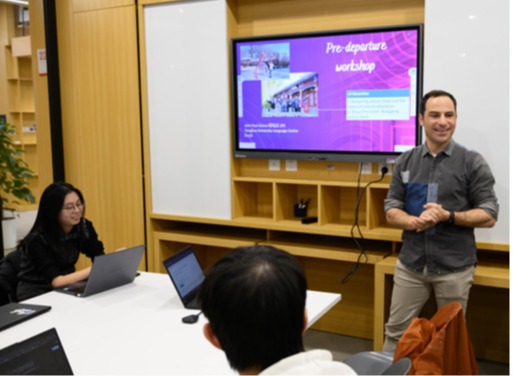
John Paul Grima facilitates a pre-departure workshop on the topic of Culture Shock.
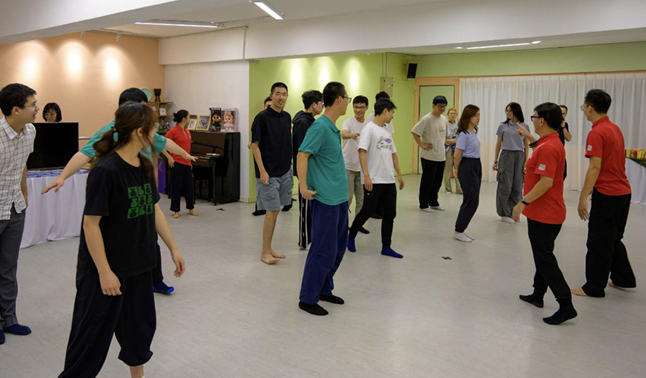
Nanyang Wanli participants engage with local dance troupe in Kuala Lumpur.
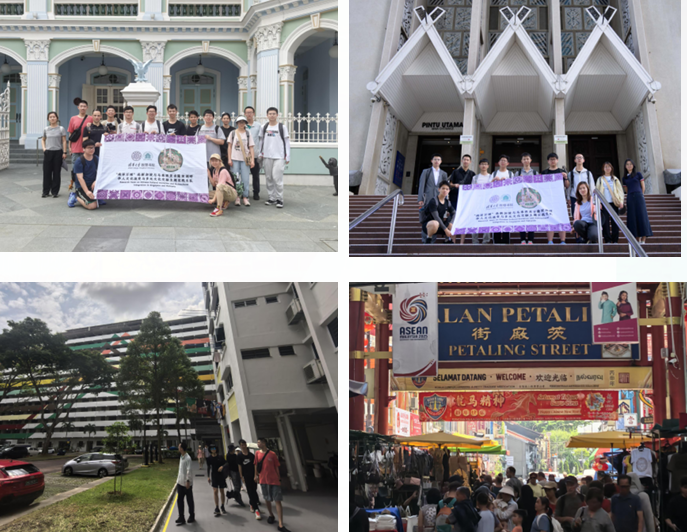
Nanyang Wanli visits various cultural sites during their immersive social practice in Singapore and Malaysia.